Category: Uncategorized

  • Finding Stories in Vintage Family Photos

    Finding Stories in Vintage Family Photos

    Are you a writer? A reader? Or a history buff, curious about your ancestors? Regardless, stories intrigue you.  Here’s the first post in my series, Researching Your Own Attic Mysteries. Learn how to dig into your vintage family memorabilia to uncover stories and the personalities behind them.

    I  thought of titling this post “I See Dead People”.

    Not that it has anything to do with apparitions. Instead, it has to do with those Ahah! moments: when images of people in musty sepia-toned images in your attic suddenly become people who intrigue you. With a little digging, you end up seeing them in whole new light.

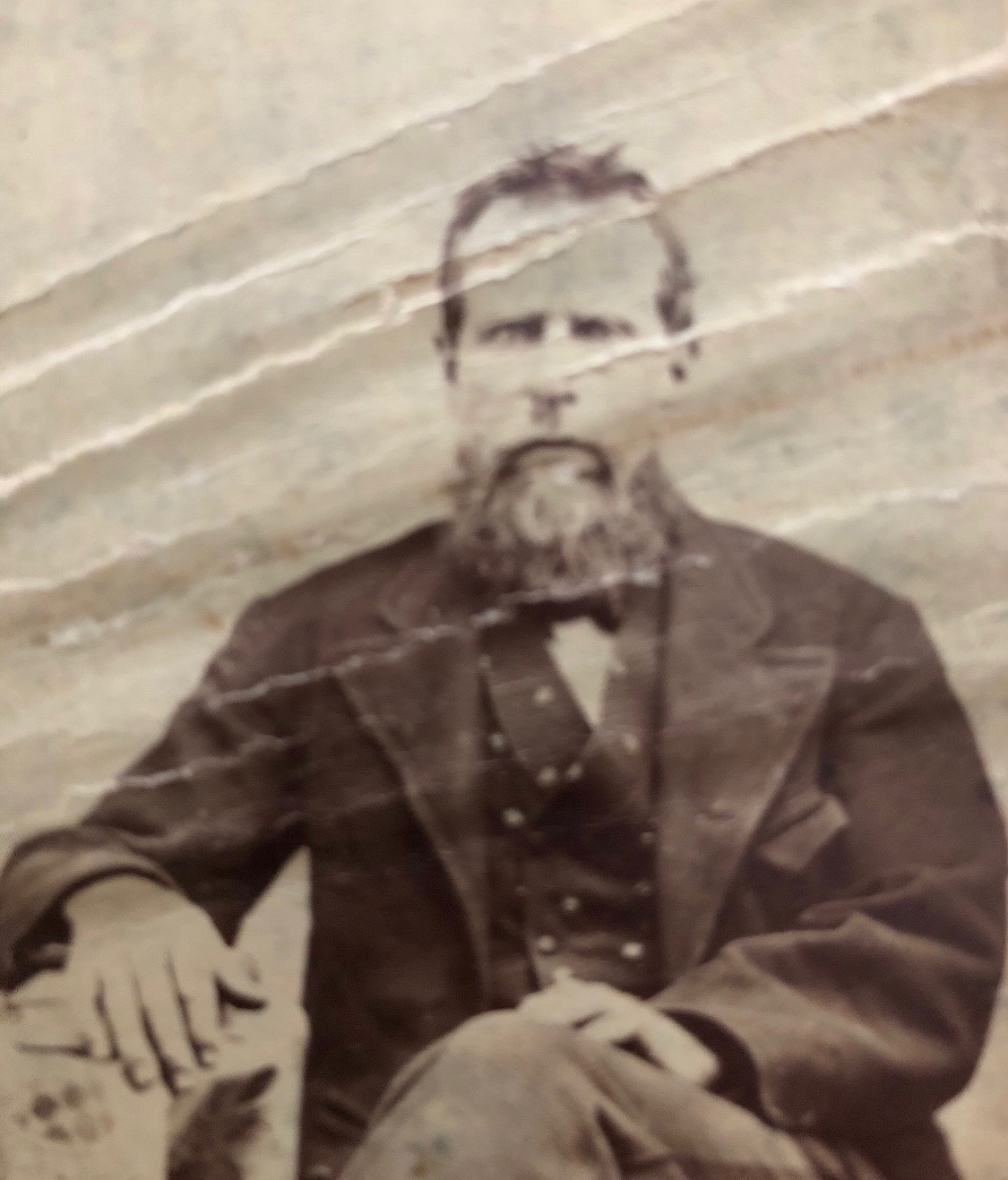
    Take, for example, this image of my great-great-grandpa, John Martin Gose (1825-1919). My grandma’s grandpa.

    IMG-8592

    A year ago, this photo meant nothing to me. Even seeing his name marked on the back meant little. But now I know his story, I’m impressed with this guy!

    What an adventurer he was. He traveled via covered wagon — from Missouri to California — to take part in the gold rush. He then moved back home, started a family, and brought them all on the Oregon Trail. The journey took nearly a year until they settled as as pioneers in early Walla Walla, Washington.

    If that doesn’t beat all, although a farmer, he managed to raise a whole passel of young’uns who became lawyers, a judge and a doctor. All his children prized education so highly that one, my great-grandpa, made sure all his own kids –including four daughters—were university educated before 1920.

    One of those girls, my Grandma Gladys, (1897-1994), was also an athlete. She scandalously swam across a lake at U-Dub in a men’s swimsuit to beat the fraternity guys, became a PE teacher in San Diego, then lived in British Raj India for seven years.

    It seems that apple Gladys didn’t fall far from the family tree — adventurers begetting adventurers.

    Do you now see John, in this photo, a little differently?

    Naturally you’re wondering how I learned so much about him. No, I didn’t make his story up imaginatively out of whole cloth. Playing armchair detective, I combed through a combination of oral family history, online ancestry programs, photos, census records, diaries, and letters. A fuller picture of John emerged. It’s amazing, once you have online tools and documents at your fingertips, how quickly you can pull facts together about people in the past.

    Old census docs contain a lot of cool details, including occupations, i.e. blacksmith or farmer. Perhaps someday your own great-grandkids will look at a census record about you, and say, “I didn’t know great-grandma was a writer!”

    As an author currently writing Gladys’ biography (about her time in India), my exploration of John is more about understanding her backstory. But Gladys is a sum of DNA parts, of her parents and grandparents and their attitudes towards life. It’s nice to not only know her better but also the people who raised her.

    I’ll explain more detail in future posts how to use various resources to uncover fascinating family details, which can be used in nonfiction stories, as elements of fictional characters,  or simply help you learn more about your own ancestry.

    To not miss any future posts here,  subscribe to CrossConnectMedia.com (upper right of this webpage), and follow my Facebook page, (Laurie Winslow Sargent: for Parents, Writers & the Eternally Curious). I’d also love it if you’d join me on Twitter at @LaurieSargent with #MyAtticMysteries.

    I’d love to know if this inspires you to drag some boxes out of your own the attic! Let me know also if you have any questions about this process of exploring old family items.

    Feel free to comment with your own tips on researching family documents, to encourage us all in our fun history explorations.

    Write on!

    Laurie

  • Answering: “What is Paperli?” for Authors

    Pro authors ask me: “What IS Paperli (paper.li)? An online newspaper or magazine? If I see myself mentioned in a Twitter link, what should I do?”

    Are people sharing your links on Twitter? Here's how Paper.li helps.
    Are people sharing your links on Twitter? Here’s how Paper.li helps.

    They’re confused even further when they click a Paperli (paper.li) link on Twitter that includes their author Twitter handle, then can’t find where in the paper they were mentioned and why.

    So let’s clarify what Paperli (Paper.li) papers are, and aren’t, including:

    * how a  paper like this is created, including how editors choose content,

    * how to locate a link in a Paperli  to see how and why you were mentioned,

    * if, how and when to thank Paperli editors for mentioning you,

    * whether or not to Retweet paper.li links on Twitter that mentioned you.

    HOW a PAPER.LI PAPER is CREATED

    Understand: paper.li is an AUTOMATICALLY GENERATED link collector. It simply collects links posted on Twitter.  The “editor” of the paper (a Twitter user) sets parameters for his or her paper, then lets paper.li do its thing.
    For example, my Family Faith and Writing Friday Post is set to automatically collect links I posted on Twitter the previous week on my Twitter page, @LaurieSargent. My goal is to offer a weekly summary of great links I shared. It shows in a newspaper style format, with headlines linking directly to the articles at their original sites.

    Editors can control what links are collected in these 3 ways:

    1.  Editors can set Paperli  up to  only gather links directly posted on their own Twitter pages, by them.
    2. AND/OR: The paper.li site is is given a list of specific Twitter handles to auto-follow and post links from. That means any link that person posts. I, personally, only link my Paperli to a few Twitter handles: literary agents who pretty much always post items of interest to my writing audience.

    So, no, author friends: I won’t automatically have Paperli  automatically add all your links to my paper via your Twitter handle. Here’s why: if you are like me, you tweet all sorts of links that may not fit the theme of my paper and my particular audience. My paper would begin to lose focus. HOWEVER, if we are mutual followers on Twitter, and I see great links to your articles, I WILL tweet those links, which WILL end up in my Paperli.

    3. AND/OR: The paper editor tells paper.li to automatically find tweets on specific topics, identified by hashtags.  This too much of a wildcard for  me personally, for my own Paperli, unless I can quickly edit out any oddball stuff paper.li picks up for me. I don’t want readers to think I’m endorsing something I’m not. But if I get more active with editing my paper I may add a few hashtags.

    Editors also control how often the paper is “published”. I choose weekly, so I can take a few minutes to edit/clean up the paper before it travels too far. Many with daily papers simply can’t keep up with that.

    HELP! I SEE I WAS MENTIONED, BUT CAN’T SEE WHERE!

    Be sure you are reading the right edition of the paper. If it is a daily paper and the paper.li tweet that mentioned you was from three days ago, go to that day’s edition. Click the Archives link (next to “Read current edition”), then the right date.

    Also helpful, once in the correct day’s edition, is to click the ALL ARTICLES or STORIES links. There, the articles appear in list view; you might see your Mention more easily.

    Note, authors, that your name may show up in a paper ONLY because you shared a link you found interesting. If the link you shared does not go directly to your website, but instead goes to an article on a different site, that’s where a click will take them to read the article. It will include a note that it was “shared by” you. This can still be nice because readers of the paper may then realize you have a tendency to share interesting stuff, so may click to your Twitter handle (linked to your name in the Shared by). They may then Follow you, and click on your website address in your Twitter bio to read about all your great books.

    Just remember that Paperli’s focus is on the article shared, not the author of the tweet. If you see articles about other authors mentioned far more often than you, it’s because those authors are active on Twitter, posting great tweets that multiple people like and want to Retweet. Or they are such interesting people, many folks on twitter are tweeting about them. You can’t force this. Get active on Twitter, interact with others, post great stuff, and Paperli papers are bound to pick up your links naturally.

    SHOULD AUTHORS THANK A PAPERLI EDITOR BY HITTING REPLY TO A PAPERLI TWEET?

     Well  . . . remember that tweets from paper.li are auto-generated. You are thanking the editor for something they may not even realized they did. Since my paper is a weekly (always on Fridays), I usually know who I’ve mentioned and why. But many papers are set to default to daily recreation, and even the editors don’t know what appeared what day. I suggest that you DON’T hit Reply on Twitter asking them why you were mentioned unless it’s a close friend. You will simply be making them do what you can do: go to the paper to find out. Honor their time.

    HOWEVER: If someone regularly Retweets your links in their Paperli, it’s nice to send them a direct tweet or message, thanking them for getting your name out there so often.

    Or if you find a link directly to your website in their Paperli, yes, thank them! ( If you’re smart, in your thank you, say “Thanks, XYZ for mentioning my article (include link) in your Paperli – I appreciate that. Friends, do Follow & visit XYZ (include their website).” The best way to thank someone is to direct others to them.

    SHOULD AUTHORS RETWEET PAPER.LI TWEETS THAT MENTIONED THEM?

    Maybe . . . if you trust the content of the paper, trust the editor, and think your followers might be interested in many of the articles in that paper. For example, one paper that often mentions me, which frequently contains other articles I like, is FAYL Parenting Ideas.  Retweeting is a nice favor to the editor.  Also, if a bunch of your author pals are also mentioned in the same automated paper.li tweet you are, a Retweet is a nice way to introduce your Twitter followers to them. But I suggest you check the paper first to be sure you truly want to lead your own Followers to that issue of that paper, which may have accidentally picked up a bizarre article via a hashtag.

    And yes, do Retweet if the mention of you in the paper connects directly with an article link leading to your site AND you like the rest of the paper’s content. But frankly, it can be laborious to take time to see if my handle @LaurieSargent was in the paper because I shared a link to my own site or elsewhere. So if mentioned somewhere, I am simply grateful, say a prayer of thanks, and let God do His thing to let that Mention of me connect me or help others. I may get to know the editor of the paper, and if we are like-minded, I’ll do what I can to periodically shine the spotlight back on them.

    Have you had a positive experience with a paper.li paper? Or have a lingering question about this? Leave a Comment below — I’d love to connect with you.

    First name only is fine, and I promise not to send unasked for emails 🙂  But click Subscribe if you do want to keep up with my future posts, which will have lots of tips related to marketing and PR for writers.