Tag: Madras

  • Unfolding Grandma’s Secret: An Antique World Map Journey

    Unfolding Grandma’s Secret: An Antique World Map Journey

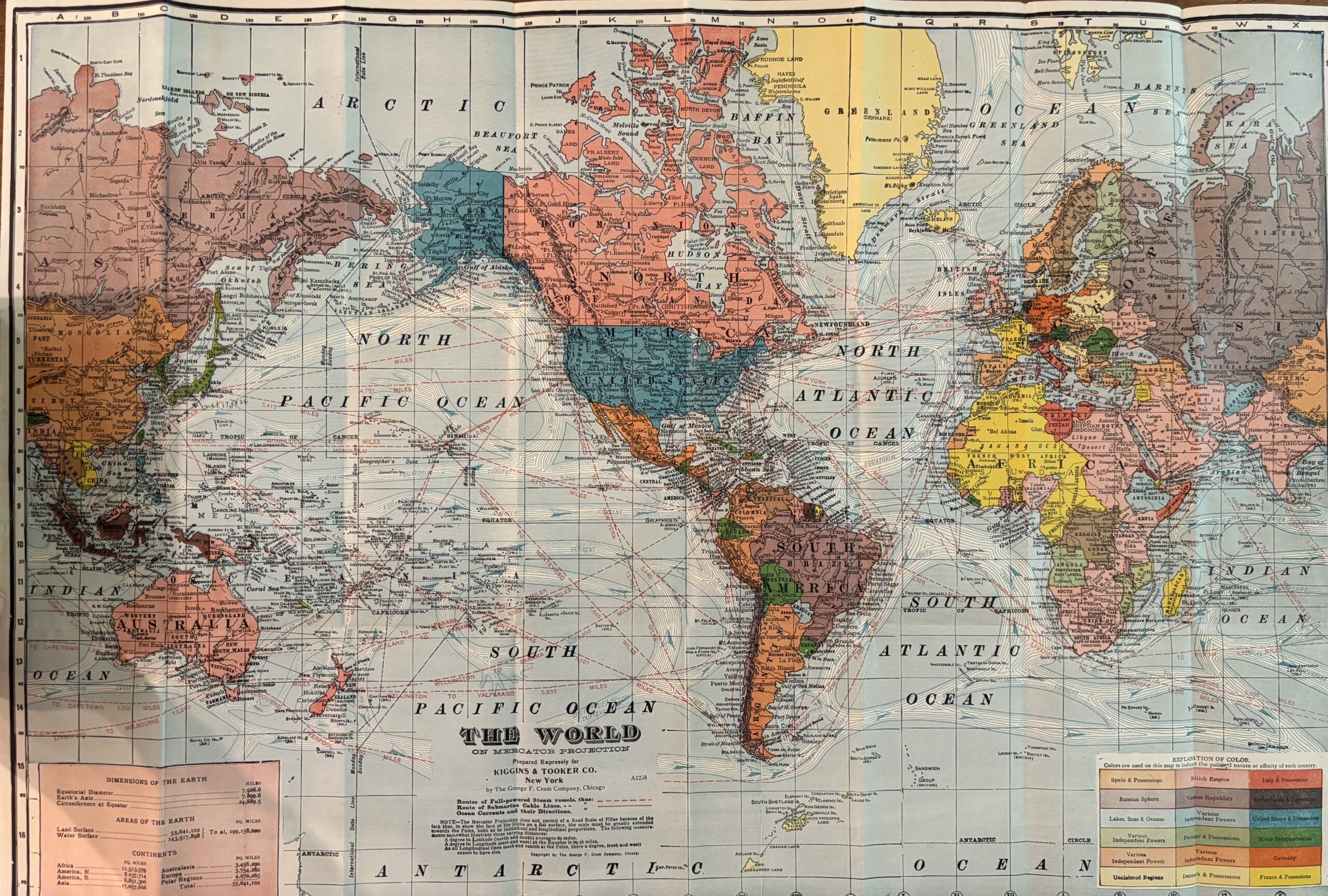
    Today’s exciting find: a historical 103-year-old world map, hidden in Grandma’s steamship travel journal!

    This 1922 antique world map (made by the George F. Cram company, Chicago; for Kiggins and Tooker CO, New York) reveals how far the British Empire and other ruling empires extended. (You can see the color-coding chart, bottom R on the map.)

    The map also includes dashes showing steamship travel paths through the seas.

    This helps me trace where Grandma’s ship sailed and stopped in 1926. The color-coding shows me who ruled the countries she passed through at that time (unless that changed shortly after the map was published.)

    As a bonus, note also the solid lines marked in the seas, indicating submarine cable lines from World War 1.

    (Later in this post you’ll see how the map unfolds from the journal.)

    Sometimes I think my own home is a historical wonderland!

    I have so many boxes of antique handwritten photos, letters, and other memorabilia, it’s easy to lose track of what I have. I joke that I came from a family of hoarders. But I DO relish items hoarded now for over a century which are now in my possession.

    It’s a historical writer’s dream, right?

    For the past year, I’ve searched for such a map online. In the meantime, I had this all along!

    I’m finally working more earnestly on my narrative nonfiction book about the years Gladys Gose Pearce and John Kenneth Pearce lived in India (1923-1933.)

    [My excuse for missing this map: I was temporarily derailed for a few years, assembling and editing a 1950s-1960s collection of vintage scifi short stories, written by yet another family member. See Gremmie’s Reef, now in print.]

    It helps that I’ve now switched my office research piles from vintage science fiction manuscripts back to the India artifacts. So I now have more at my fingertips, including this travel journal.

    Here’s how this antique world map physically unfolds:

    When Gladys wrote in this journal, she’d just begun her steamship journey. It would last 51 days.

    She noted that she boarded the S.S. President Garfield in San Francisco, California in August of 1926. She then had various stops in other countries and ship changes before finally landing in Madras, India to marry Grandpa Ken.

    A bit of their romantic history:

    Ken graduated from high school in Walla Walla, WA with Gladys in 1915. They then both attended the University of Washington in Seattle.

    After college graduation, Gladys went to San Diego to teach.

    In 1923, 25-year-old Ken (J. Kenneth Pearce) was sent to South India, to work as a Forest Engineer for the British Indian government.

    In the fall of 1925, Ken got a short home leave to visit Washington State. He then proposed to Gladys. It was about time! For ten whole years they’d been close friends. But during that visit, sparks flew.

    Gladys and Ken would live in India until 1933: first in South India, and later in the Andaman Islands.

    The Andaman Islands

    The Andamans are tiny specks on this world map, in the Bay of Bengal. The islands are east of the Indian mainland, near Burma (now Myanmar) and Siam (now Thailand.)

    This particular map has the Americas in the center (being published in the USA.) So the R edge of this map shows the mainland of India, while the L edge has the Andaman Islands.

    If you zoom in close you can see where Gladys put an arrow pointing to them. Seeing it on a globe or other-centered map might make it easier to visualize this.

    Still, what a great find this is! I now have this map as my computer screensaver.

    I’m sure the cartographers who drew it 103 years ago could have never imagined THAT.

    What’s in your own attic, basement, or closet? What surprise about your own ancestors awaits you…or have you already found?

    Please share your own discoveries in a comment, or email me via my Contact page. I’d love to hear from you.

    Laurie
  • Grandpa and the Maharaja of Jaipur

    Grandpa and the Maharaja of Jaipur

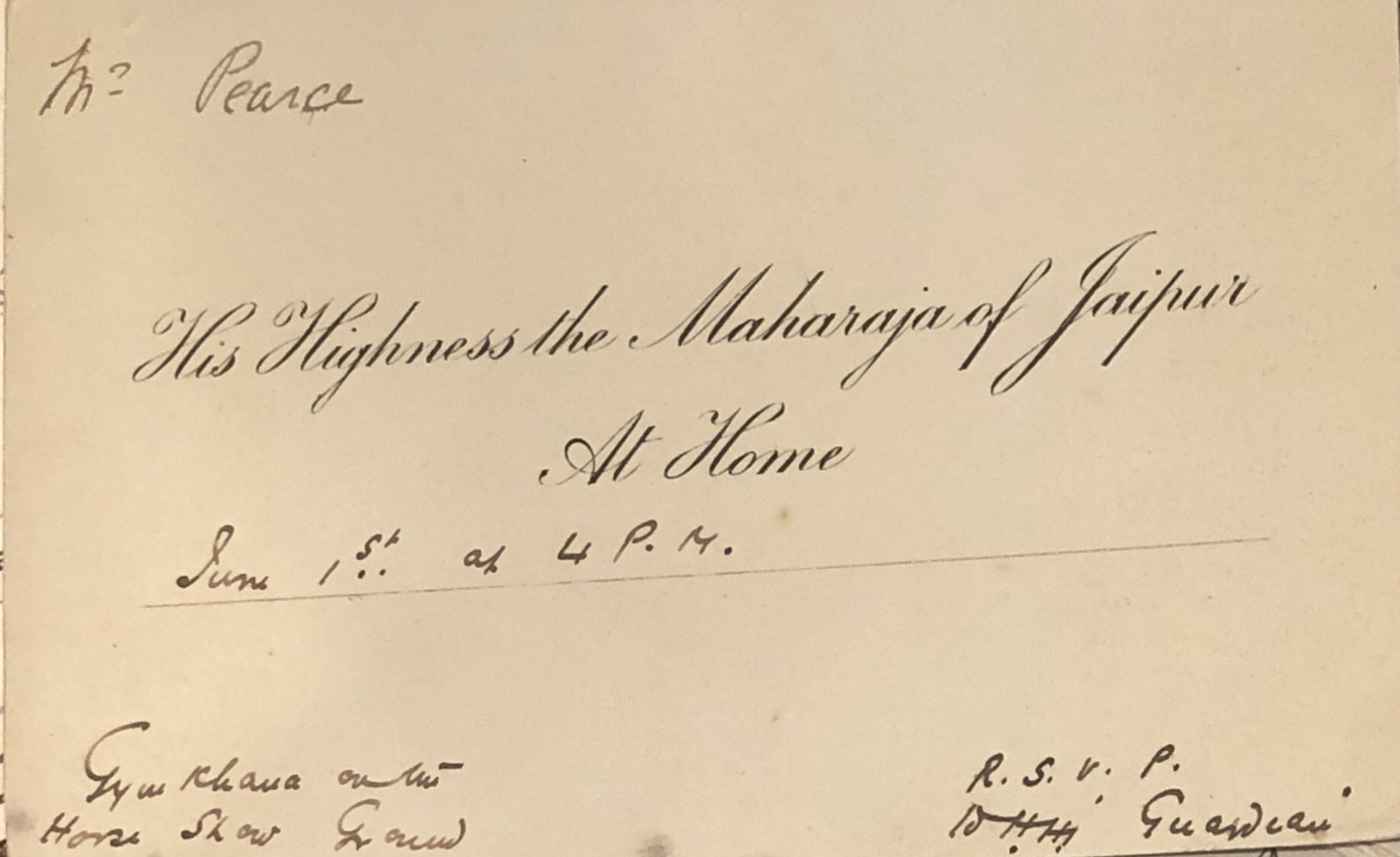
    The book The Henna Artist (by Alka Joshi) includes scenes set in the Indian palace of the Maharaja of Jaipur. That brings alive a 1920s invitation in my possession–from that maharaja to my American grandfather, J.K. Pearce.

    This is an invitation to my grandfather from His Highness the Maharaja of Jaipur. The location and time: At Home (the palace) June 1st at 4 P.M. (most likely a year between 1923 and 1926.) The event was a Gymkhana (featuring races and competitions) on the Horse Show Lawn.

    While this seems a huge departure from my recent blog posts on vintage sci-fi and Reawakened Worlds, it’s not quite the stretch you imagine. Yes, 1920s historical nonfiction and 1960s science fiction are different genres. But what they have in common is the past.

    The connection between the two genres is an abundance of artifacts inherited from my own family. They surround me in my home office.

    On one hand, I possess vintage science fiction manuscripts, author-agent letters, and magazines (Galaxy, IF, and others) with short stories written by my stepfather in the ’60s.

    Yet I’m also surrounded by 1920s ephemera. That includes photos, film reels, diaries, letters, and unusual objects from my maternal grandparents’ time in British Raj India (1923-1933.)

    Sometimes I can’t recall which time period I’m in, particularly 2024!

    But back to how Grandpa met the Maharaja of Jaipur, and why a young American man from Washington State was in India to begin with…

    Grandpa studied Forest Engineering at the University of Washington, then as an associate professor attended the Pacific Logging Conference. There he met a man who was working in the logging industry in India. That man encouraged my grandfather Ken (J. Kenneth Pearce) to apply for, take over, and expand his position.

    So at about age 26, Ken was hired by government of India (then under control of the British.) He assumed a position of high authority in South India which he held for ten years. His job was to oversee elephant logging camps, introduce machine power into the camps, and help establish sawmills. At times he also functioned as a district magistrate.

    In India, Ken he was called Sahib and Master Pearce, and Grandma Gladys was his Memsahib.

    That felt awkward to them at times. There was great pressure for them to hire many servants. Yet both of my grandparents were highly industrious, hard-working people. They often simply wanted to do the work themselves.

    Grandpa worked from sunup to sundown, often shoulder-to-shoulder with his Indian laborers (most who were ex-convicts.) Grandma sewed clothes for herself and Ken. As a physical education teacher, she was hired to evaluate physical education programs in schools in Madras and other cities.

    As for the Maharaja of Jaipur–I believe this particular invitation was for just Ken, before Grandma Gladys sailed to marry him in 1926. Then Ken and Gladys lived in Tamil Nadu region until 1929, primarily in Madras (Chennai) and Ooty. (1930-1933 they lived in the Andaman Islands.)

    Ken managed logging camps throughout South and Southwest India. The University of Washington archives hold artifacts related to the forestry work of J.K. Pearce in India. However, I hold all his personal mementos from that time and place, plus additional logging ephemera.

    Grandma also met a maharaja: the Maharaja of Mysore, who had a summer palace in Ooty (the Fernhills Palace.)

    Gladys wrote of a funny (or disconcerting?) event that took place on the palace lawn. Before moving to India, she had saved money from her job as a junior high physical education teacher. On the steamship ride over, during a stop in Asia, she bought her first set of pearls and treasured them.

    At the palace, a young child (one of the princes) approached her bedecked with jewels. He pointed at her pearls and demanded to have them. As you can imagine, she clutched them, and gave him a firm “No.” She had worked too hard for those!

  • A Mongoose Surprise

    A Mongoose Surprise

    In 1926 British India, the Adyar Club in Madras (Chennai) had an unusual resident.

    Here’s yet another of Gladys’s funny experiences in 1920s India, seeing yet more things unfamiliar to her in America! First, a quick note:

    Note: Subscribers to my Sell Your Nonfiction & Parenting by Faith blogs (with email addresses from my old blogs merging with my new this week) may wonder about these history-related posts! Future writing and parenting articles will post here at CrossConnectMedia.com. I hope you’ll also enjoy these quirky excerpts from my nonfiction book in progress based on near-100-year-old letters.

    Now back to our Seattle gal, Gladys, and her adventures:

    Gladys Gose Pearce, October, 1926

    Adyar Club, founded in 1832, is our favorite club. We get to see old friends, new friends, and other people’s romances in the making. We love playing golf there on its mild course with the smooth grounds, kept in perfect condition as a laborer whisks them to perfection after each player departs.

    After golf, I like to take a refreshing bath, change for dinner, and have time for a rubber of bridge on the veranda with a favorite drink. Twilight deepens, a brief sunset, short twilight, then it is night. Sometimes a tea and dance at the end of the day is pleasant.

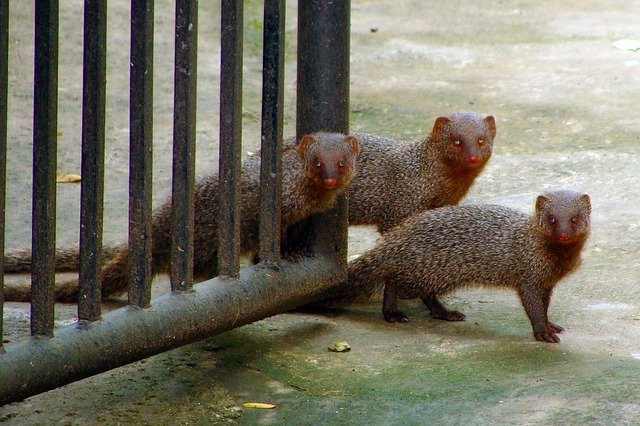
    At the club I saw a strange creature with a long tail dart across the veranda, followed by several small ones.

    (more…)