Tag: family history

  • The Mysterious Boston Boy Captain

    Identifying people in antique photos of ancestors–then finding their stories–can present fun history challenges.

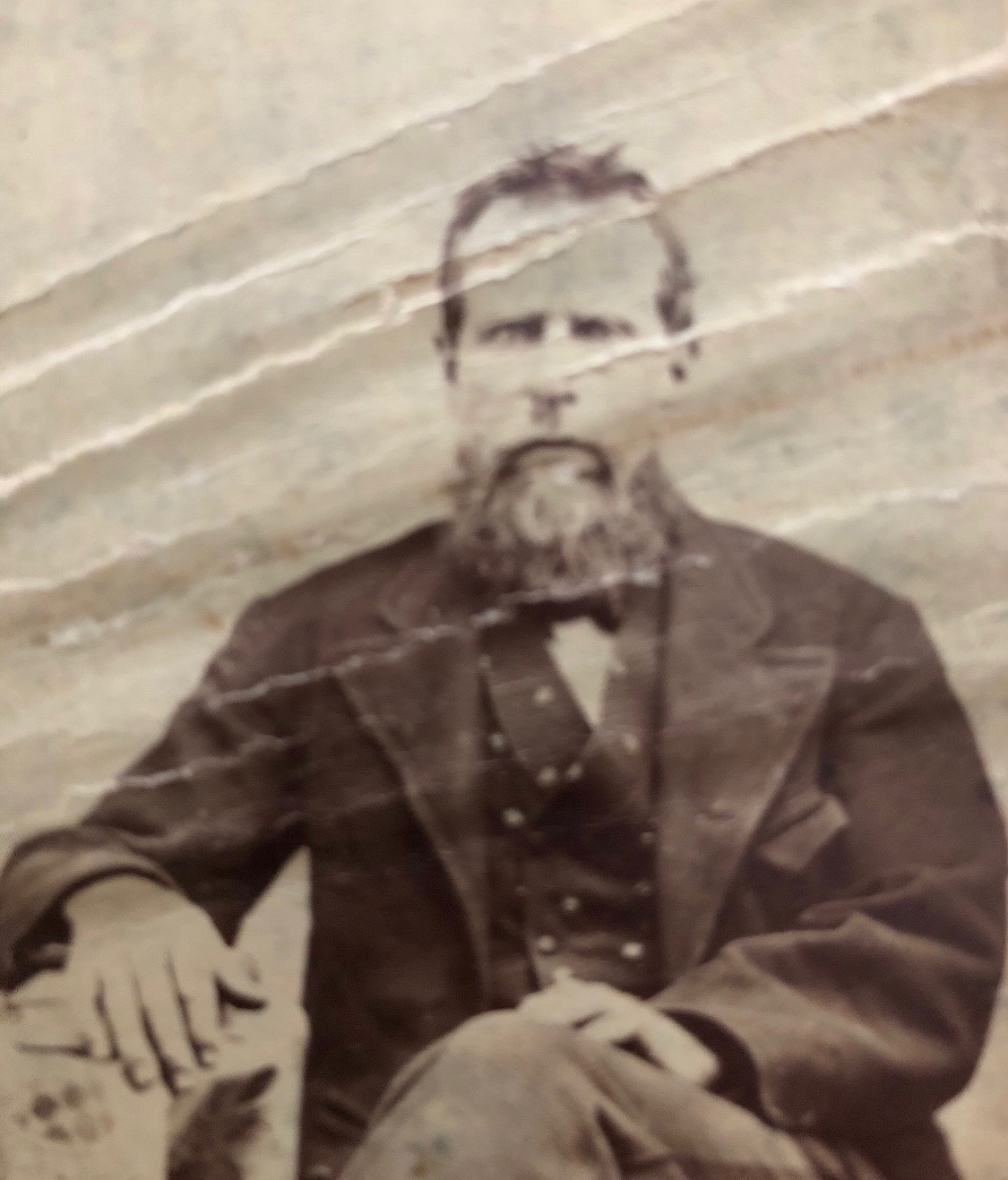
    As my family’s armchair history detective, I became curious about the boy in this photo.

    Who was he? How could he have been a captain at such a young age? What happened to him?

    The photo was mixed up with miscellaneous photos from my attic. At first, I wasn’t sure which family line he even came from. So I decided to try combining family records with internet tools to get my answers.

    I checked for clues on the back of the photo, and found these notes written in ink:

    Capt. W.B. Piper, E.H.S Go Fi 1st Bat BSR ’89.

    As in 1889–one hundred and thirty seven years ago!

    My first challenge: WHO the heck was W.B. Piper?

    Thankfully I had a good start. The last name Piper is in a tree I previously created on Ancestry.com, so I recognized the Piper name. I have the app in my phone, so it’s very easy and quick to pull up a specific tree.

    In the Piper tree, a W.B. Piper did not appear anywhere. So as an experiment, I decided to temporarily add him to it. (If you try an experiment like this, I suggest you set your tree to Private; if Public others may copy your tree including potential errors.)

    But before adding him, I needed to guess which generation he was born into. I couldn’t make him his own grandfather, right?

    I pondered: why do I, in particular, own this photo? Which family member am I personally connected to in the Piper family tree, who would have logically passed this photo down to me?

    The answer lay in an antique lowboy given to me by my great-aunt Dorothy. In a drawer is a DAR certificate for an S. Lizzie Piper. (Her fun story I’ll share about in another post.)

    Anyhow, I knew by now that Dorothy’s mom, Gretchen, had an aunt Lizzie. It seemed logical that W.B. would be connected to Gretchen or Lizzie, for Dorothy to have had this photo and me to now have it.

    It made sense that I might have a picture of my aunt Dorothy’s uncle.

    So as you can see in the image of the tree below, based on Gretchen’s birth year and how old the boy in the photo looked in 1889, I added W.B. as Gretchen’s brother.

    Screenshot

    Bingo! Next to W.B.’s name, I clicked the waving green leaf and confirmed that his full name was William Benjamin Piper, so I did add him permanently to the tree.

    Official documents linked to clues in Ancestry.com revealed his parents names were indeed William Piper and Mary Green and Gretchen his sister.

    Woohoo! Official grave information found via the app recorded his exact birth date, which fit perfectly. He was only a year younger than his sister Gretchen.

    (As a side note, as you look at the tree above, you’ll see a Susan Elizabeth Greene or Green, who was S. Lizzie Piper. I think she must have been a fun person to insist on being called Lizzie instead of Susan or Elizabeth!)

    My second challenge: Decipher the notes on the back of the photo.

    I typed into a Google Search in my computer the strange abbreviations to see what they might mean:

    Again, those were: Capt. W.B. Piper, E.H.S Go Fi 1st Bat BSR ’89.

    Google Search made a few guesses, but as I later discovered got many of the abbreviations wrong. It was on the right track though–thinking E.H.S. was a high school. That made sense, as I now knew the photo was taken in 1889 when William was only sixteen years old.

    But Google’s AI could only guess at the military notes, so it was time for:

    My third challenge: Upload the photo to see if the military uniform could be identified.

    [Want to try this? Take a picture with your phone of an antique photo of ancestors, or one ancestor, who you can’t quite place. It helps to also have the Google app in your phone. Go to your Photos folder, and select that photo. Click the tiny upload/share box with an upward arrow below your photo. Next, click Google, then Search with Google Lens.]

    Because I included the whole photo (including watermarks for a Boston photography studio) then selected advanced AI, I quickly solved the school and captain mysteries.

    “E.H.S.” was the English High School in Boston. “Go Fi” was the sports team’s cheer for “Go Fight,” apparently when they played their rival, Boston Latin School.

    William wore a uniform for the Boston School Regiment of which he was captain of the first battalion. (1st Bat BSR )

    The Boston School Regiment was a military program for Boston high school students, also known as the Boston School Boy Cadets. It was started in 1863 during the Civil War, to prepare young men for potential service.

    It became a century-long tradition with competitive prize drills and parades. But by the 1950s it was phased out as JROTC began, going from involuntary to voluntary.

    Now that William had become a live person to me, I wondered what happened to him.

    Well, if you want to end this story on a happy note, read no further.

    But if you want the details: William Benjamin Piper’s life came to a tragic end. An ancestry link sent me to Newspapers.com, to which I also subscribe to, to read newspapers from the 1700s and 1800s. (That’s often great fun, by the way–though not reading the sad stories like this one.)

    William died in a hotel at only 23 years old (a few months shy of his 24th birthday.) The cause? Chloral poisoning. Chloral was used at the time as a sleep aid. William had overdosed, with the article suggesting it was due to “melancholy” (depression).

    That made me sad. Yes, he died 130 years ago, so of course would no longer be alive anyway. But still, what a tragedy for a family. It makes me think about how Dorothy’s mom was only 25 years old when she lost her brother, and my great-aunt Dorthy was born only 5 years later. I can recall having a preschooler while also grieving loss of a family member. Grieving is grieving, no matter what time period you live in.

    Below is a photo of the home where W.B.’s family lived (according to the address is listed in other documents attached to W.B. and a Google Maps search.) It’s certainly a beautiful home. I sincerely hope many beautiful memories have been made in that home in the five to six generations living it it since the loss of W.B.

    Are you inspired to research and identify people in antique family photos of your own, and find those ancestors’ hidden stories?

    I’d love to hear comments from you about any family mysteries you’ve solved this way.

    Laurie

    A little P.S. for Piper or Bartlett descendants:

    Dorothy Bartlett was married to my grandpa’s brother, Max Pearce. Her mother was Gretchen Pickering Piper (1871-1943.) Dorothy had no children, but had two brothers: Dudley Bradstreet Bartlett and Phillips Payson Bartlett. Their great-aunt was Susan Elizabeth Green (sometimes spelled Greene.)

  • Podcast Interview: Parenting Personalities and History

    Podcast Interview: Parenting Personalities and History

    For her Heart of the Matter podcast, Cynthia L. Simmons and I discussed parent-child personality differences and homeschooling. We also looked back through history at one 1930s mom’s parenting style.

    Interview with Cynthia L. Simmons and Laurie Winslow Sargent: Heart of the Matter Radio

    For the Oct 2, 2020 podcast, How to Delight in Your Child as You Homeschool, Cynthia asked me great questions related to the book Delight in Your Child’s Design. We talked about ways to inject more fun into parenting that allow children to learn more organically. In other words, when they’re having fun, they don’t always realize they’re also learning. We also talked about leaving a legacy of playful parenting, and about how in some ways parenting has changed little in a century. In this blog post I share a bit of what we discussed, plus a time capsule tip:

    (more…)
  • Calculating Characters in Family History

    Calculating Characters in Family History

    In writing history – family history or a historical biography— using a little math humanizes characters so we can see them as former living, breathing human beings.

    An ancestry chart can provide nuts and bolts about people: birth dates, death dates, marriage dates.  But how can those dates tell a story?

    While researching one interesting true character in my own tree for a history magazine article, I learned the following about a guy named John. Read (but feel free to skim) this next paragraph. I guarantee it’s boring, but a fresher approach follows:

    John Martin Gose (1825-1919) married Hannah Jane McQuown (1831-1925) in 1854. They moved from Missouri to the Washington Territory in 1864 with five children, Thomas Phelps (b. 1855), Dora (b. 1856), Mack (b.1859), John (b. 1861) and Christopher (b.1863). They arrived in Walla Walla in 1865. A sixth child, Oscar (b. 1865 or 1866) was born there.

    With no additional information other than those dates and locations, can we discern more about what this family was like and make their story more interesting?

    1 calculator + 1 family tree = more compelling stories.

    Doing a little math with the dates provided, this picture emerges:

    24-year-old John and his wife Hannah, 22, began their year-long journey on the Oregon Trail with five children all under ten years old. In their covered wagon were Phelps (9), Dora (8), Mack (5), John (3) and Christopher, a nursing baby. After arrival in Walla Walla, Hannah had another child, Oscar — she’d been expecting him either during the during the arduous journey or shortly after arriving in the new settlement. Years later, when the children were teens, tragedy struck. To the devastation of John, Hannah, and the siblings, Oscar died when he was only 12 years old. 

    Although I was able to confirm that yes, they traveled the Oregon Trail, dates and locations alone strongly suggested that initially. All other details in the previous paragraph came from my simply subtracting birth dates from death dates, then imagining what that must have been like for them. Who knew math could tell a story?

    Does this give you an impulse to look at your own ancestral tree in a new way? Eager to find stories about your own family history? Whip out your calculator too! Let me know what stories you discover.

    If you think that’s a fun way to learn about your ancestors, you may like this post, too: A 1915 Yearbook Shows Teen Life 105 Years Ago

  • Finding Stories in Vintage Family Photos

    Finding Stories in Vintage Family Photos

    Are you a writer? A reader? Or a history buff, curious about your ancestors? Regardless, stories intrigue you.  Here’s the first post in my series, Researching Your Own Attic Mysteries. Learn how to dig into your vintage family memorabilia to uncover stories and the personalities behind them.

    I  thought of titling this post “I See Dead People”.

    Not that it has anything to do with apparitions. Instead, it has to do with those Ahah! moments: when images of people in musty sepia-toned images in your attic suddenly become people who intrigue you. With a little digging, you end up seeing them in whole new light.

    Take, for example, this image of my great-great-grandpa, John Martin Gose (1825-1919). My grandma’s grandpa.

    IMG-8592

    A year ago, this photo meant nothing to me. Even seeing his name marked on the back meant little. But now I know his story, I’m impressed with this guy!

    What an adventurer he was. He traveled via covered wagon — from Missouri to California — to take part in the gold rush. He then moved back home, started a family, and brought them all on the Oregon Trail. The journey took nearly a year until they settled as as pioneers in early Walla Walla, Washington.

    If that doesn’t beat all, although a farmer, he managed to raise a whole passel of young’uns who became lawyers, a judge and a doctor. All his children prized education so highly that one, my great-grandpa, made sure all his own kids –including four daughters—were university educated before 1920.

    One of those girls, my Grandma Gladys, (1897-1994), was also an athlete. She scandalously swam across a lake at U-Dub in a men’s swimsuit to beat the fraternity guys, became a PE teacher in San Diego, then lived in British Raj India for seven years.

    It seems that apple Gladys didn’t fall far from the family tree — adventurers begetting adventurers.

    Do you now see John, in this photo, a little differently?

    Naturally you’re wondering how I learned so much about him. No, I didn’t make his story up imaginatively out of whole cloth. Playing armchair detective, I combed through a combination of oral family history, online ancestry programs, photos, census records, diaries, and letters. A fuller picture of John emerged. It’s amazing, once you have online tools and documents at your fingertips, how quickly you can pull facts together about people in the past.

    Old census docs contain a lot of cool details, including occupations, i.e. blacksmith or farmer. Perhaps someday your own great-grandkids will look at a census record about you, and say, “I didn’t know great-grandma was a writer!”

    As an author currently writing Gladys’ biography (about her time in India), my exploration of John is more about understanding her backstory. But Gladys is a sum of DNA parts, of her parents and grandparents and their attitudes towards life. It’s nice to not only know her better but also the people who raised her.

    I’ll explain more detail in future posts how to use various resources to uncover fascinating family details, which can be used in nonfiction stories, as elements of fictional characters,  or simply help you learn more about your own ancestry.

    To not miss any future posts here,  subscribe to CrossConnectMedia.com (upper right of this webpage), and follow my Facebook page, (Laurie Winslow Sargent: for Parents, Writers & the Eternally Curious). I’d also love it if you’d join me on Twitter at @LaurieSargent with #MyAtticMysteries.

    I’d love to know if this inspires you to drag some boxes out of your own the attic! Let me know also if you have any questions about this process of exploring old family items.

    Feel free to comment with your own tips on researching family documents, to encourage us all in our fun history explorations.

    Write on!

    Laurie